Rubrics are now available in Google Classroom!
Written by: Kelly Campbell-Dries

Are you looking for an interesting way to give students valuable feedback while clearly stating learning goals and curriculum expectations? Then sign up today to be a Beta Tester for the new Rubrics feature in Google Classroom.
You might think that this is a lot of work, but trust me, it is not. I am currently a teacher at ACS, and I am always looking for new and innovative ways to leverage technology in the classroom. What I like about this feature is that it is extremely simple to use.
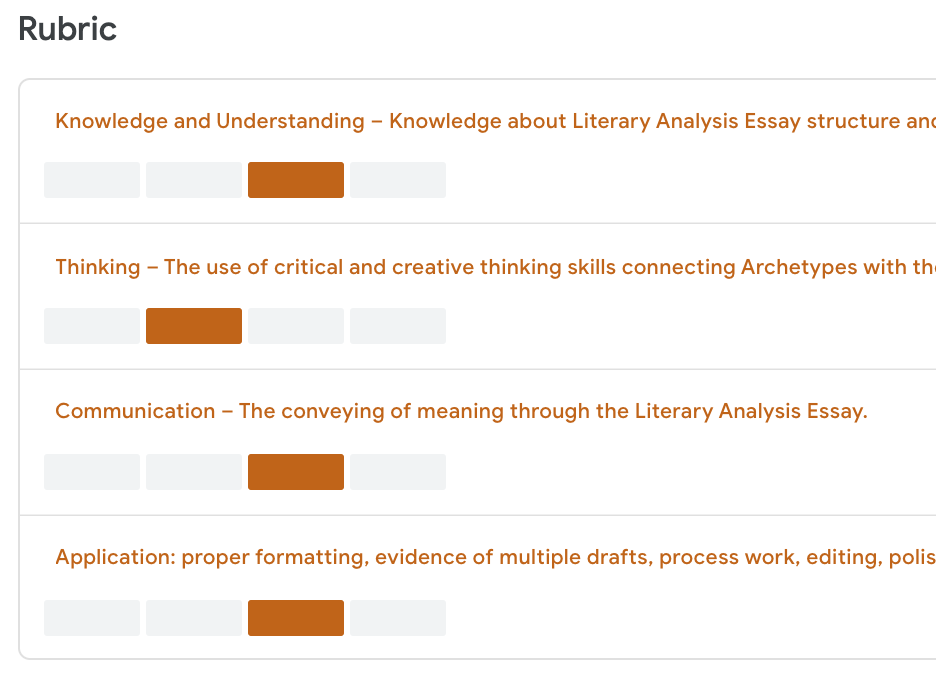
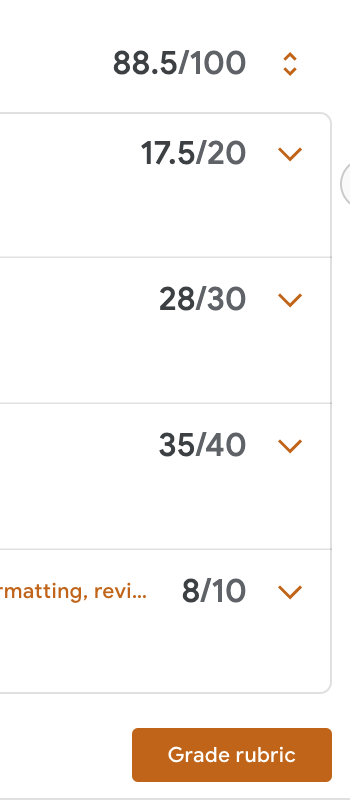
You begin by creating an Assignment in GC. There, you will see that there is a “Create Rubric” button where you can build your rubric. In HS, we mark out of four categories that are weighted differently. GC always made the assignment out of 100, so it was difficult to show students exactly how you marked their work in a digital format. With the Beta feature in GC, you can now assign category, with an explanation of what you are assessing. For example:
Here you can see that the criteria is there, and the orange blocks indicate the level of achievement.
I make mine out of the particular weights according to my department. Here you can see how each of the levels are calculated.

What I like about this feature, as you will see on the video, the student has the rubric on the left, as well as your direct comments, so you can easily see the valuable feedback you are given the students.
An extra feature that I like about this as well is that students have the opportunity to respond and reflect on their essay in the Private Comments section. Here you can make goals for next steps, or reflect on their learning.
The possibilities are endless.
Also, using this feature in GC is wonderful because you have the opportunity to reuse the assignment, even if you archive the class. The rubric comes with the assignment, so it can be used again and again.
One final benefit of this is that GC keeps all your marks into Google Sheets in a live, updated document. What I am going to suggest to them however, is that it keeps track of the different marks, not just the overall mark.
If you would like to give this a try, please click on the link below.
Please see the following video that explains a little more about the features.


No comments:
Post a Comment